Citizen Science Nova Scotia is a Facebook Group sponsored by the Save Our Old Forests Association. The purpose of the project is to provide a centralised platform to coordinate and promote Citizen Science workshops, events and presentations throughout Mi’kma’ki (Nova Scotia). Help identify areas of ecological diversity and maybe even find some hidden old growth forest.
Join Citizen Science Nova Scotia to share photos, learn about upcoming events and get involved!
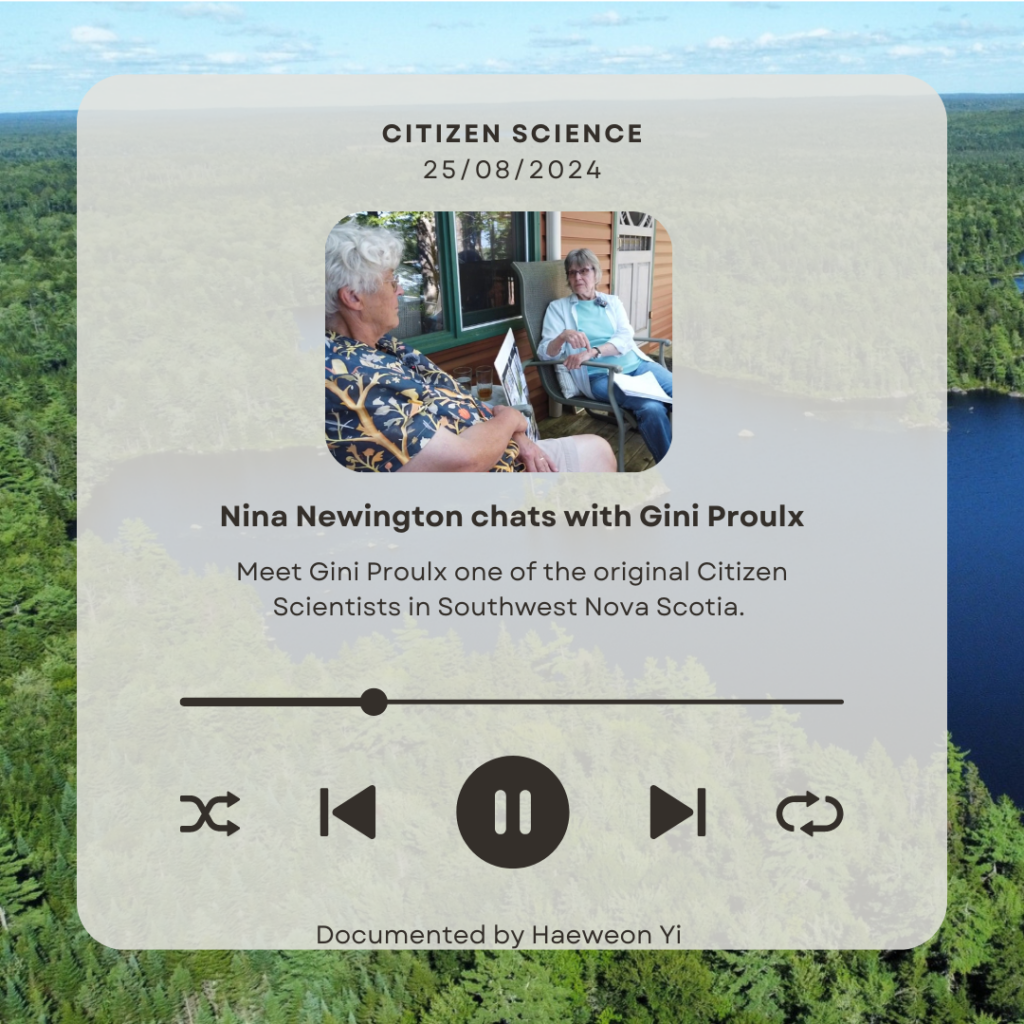
Interview with Gini Proulx
Meet Gini Prouxl – a Citizen Science trailblazer in Southwest Nova Scotia!
On a sunny afternoon in late August 2024, Nina Newington met up with Gini Proulx and had a great conversation about citizen science. Gini shared her stories with Nina and talks passionately about her adventures adventures observing and documenting the natural world from her family’s camp near the Tobeatic and all along the Digby Neck and everything in between!
Interviewer: Nina Newington
Documentation: Haeweon Yi
Citizen Scientists published Paper
“Bursting the Stubble Bubble: Citizen Scientists Measure Ecological Continuity Near Goldsmith Lake, Nova Scotia Using Calicioid Lichens and Fungi,” Ashlea Viola, Nina Newington, Jonathan Riley, Steven Selva, and Lisa Proulx Evansia 41(1), 9-18, (17 April 2024).
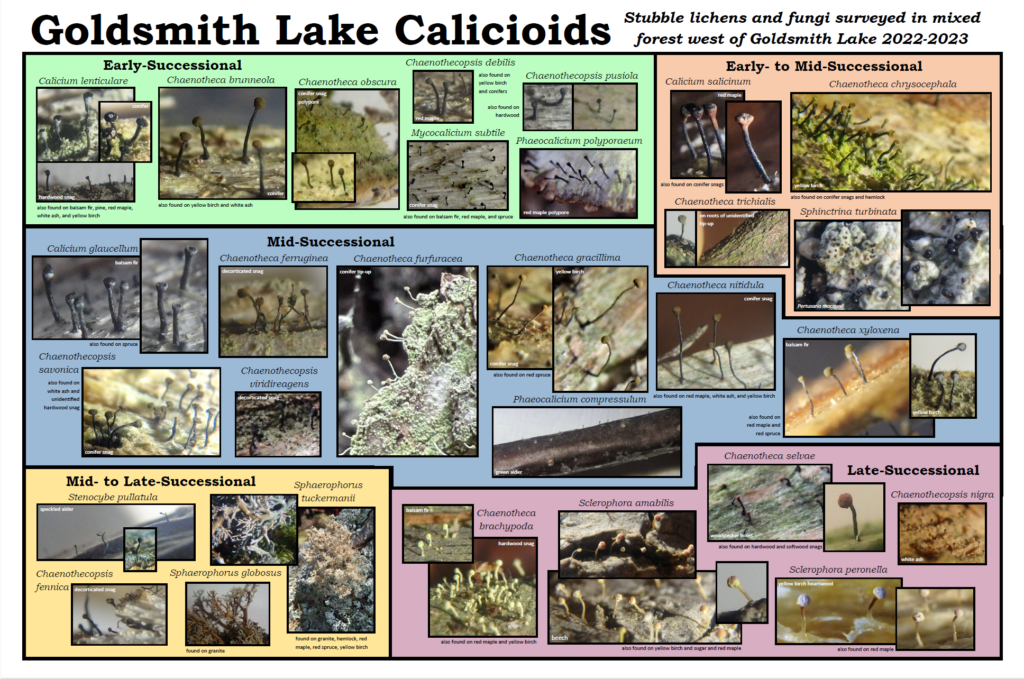
Abstract: In an effort to protect a forest on provincial land near Goldsmith Lake in Annapolis County, Nova Scotia, from timber harvest operations, a group of citizen scientists began documenting the biodiversity of the area. In December 2022, the group invited Dr. Steven Selva, a lichenologist specializing in calicioid lichens and fungi, to visit and teach them how to locate and collect calicioid specimens. We found 27 calicioid species, one of which was new to the Maritimes, providing additional evidence that the forest is rich in biodiversity and that the areas recognized as old-growth were larger than the provincial government had previously realized.
RESOURCES
Congruent Long-Term Declines in Carbon and Biodiversity Are a Signature of Forest Degradation, Matthew G. Betts, Zhiqiang Yang, John S. Gunn, Sean P. Healey
Natural climate solutions (often tree planting) have been proposed to fix climate change. But how good are managed eastern Canadian forests for sequestering carbon? Over the past 35 years, the forests of New Brunswick, Canada have been losing rather than sequestering carbon, according to a scientific article published today in the peer-reviewed Global Change Biology. This is counter to common popular belief that managed forests are carbon sinks and that tree plantations are good for the climate. The study has implications for how eastern Canadian forests are tallied in Canada’s efforts to reduce climate impacts.